
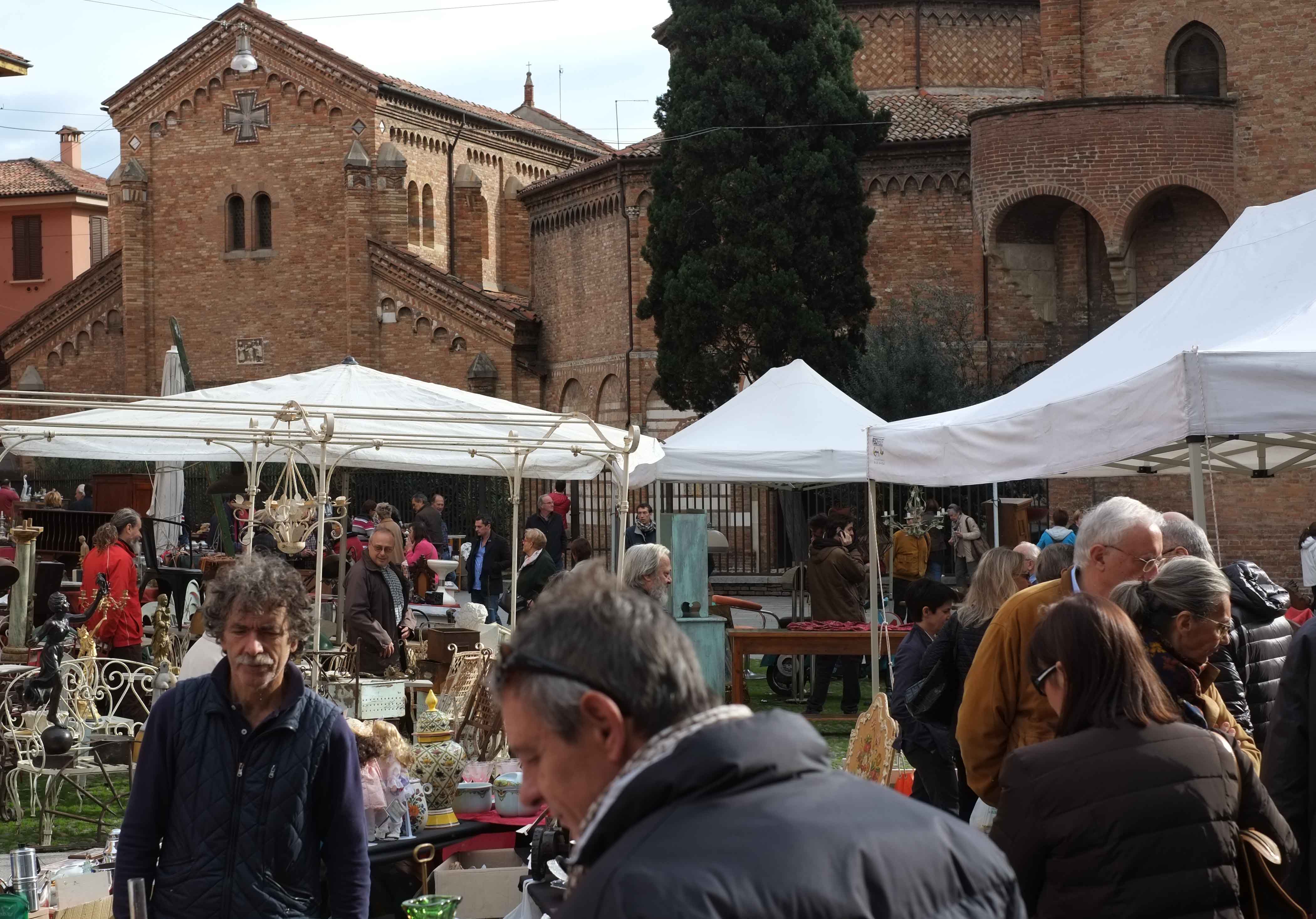
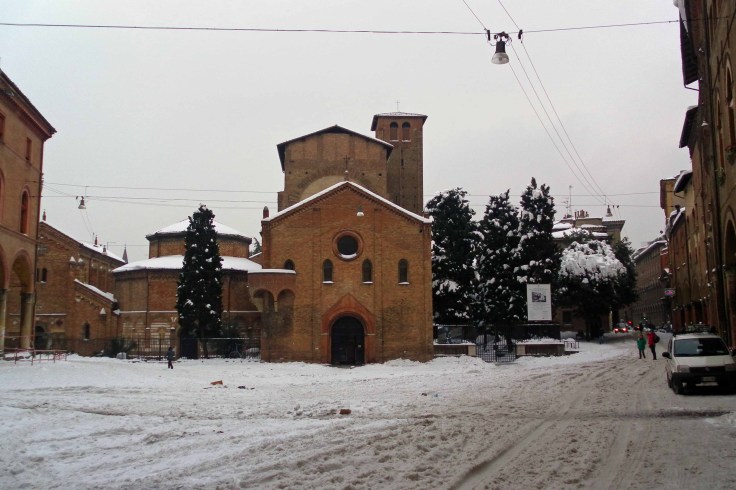
Perhaps my favourite place in Bologna is the collection of 7 churches collectively called “Santo Stefano”, together with the piazza of the same name in front of these churches. It’s a very atmospheric place, steeped in history. A lively monthly antiques market also takes place in this piazza – see another post in this blog Bologna’s Antiques Market .
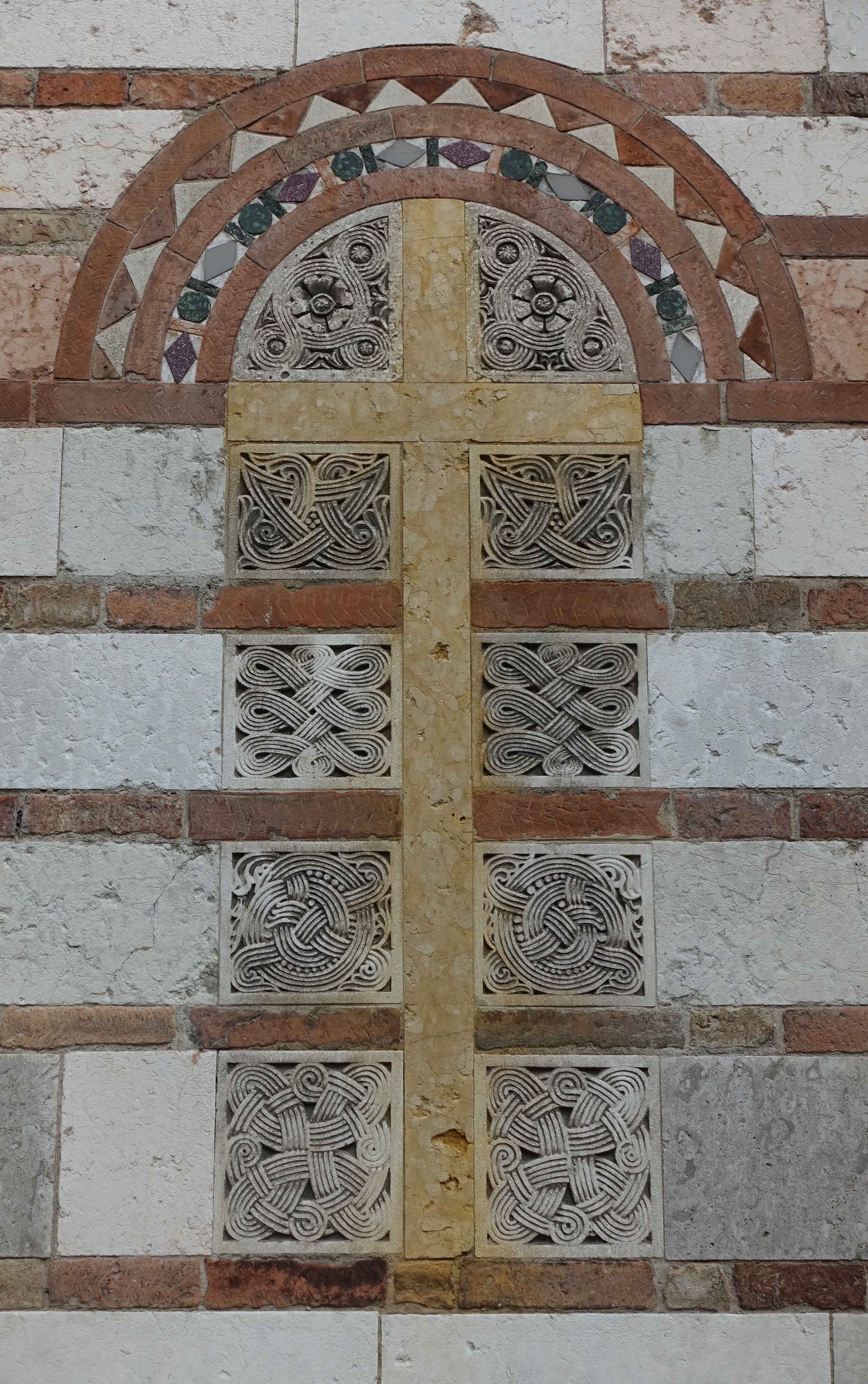
Some of the churches in this complex are extremely old, although many modifications have been made over the centuries and there was considerable damage done by the Hungarians in the 10th century.
Ancient times
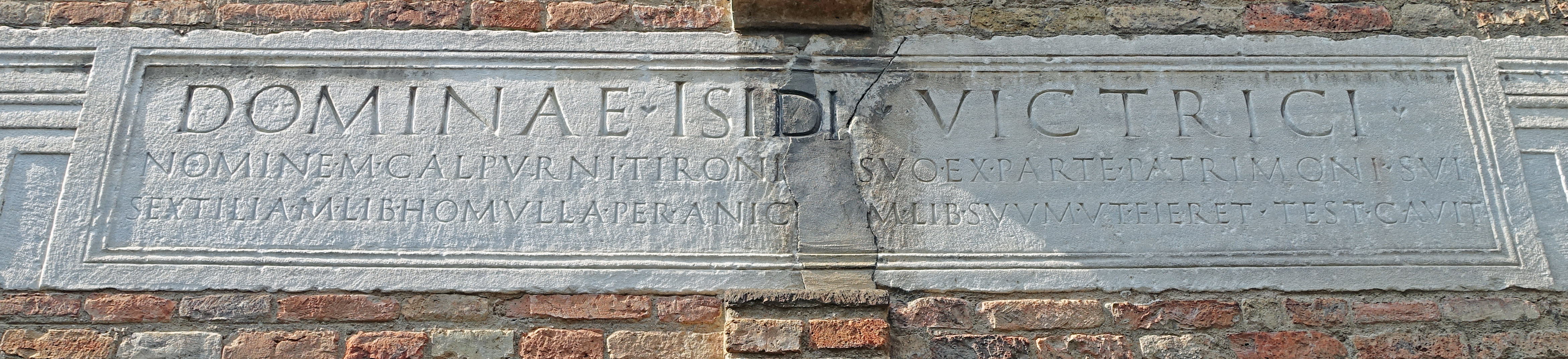
There is evidence that this was, in Roman times, the location of a temple to the Egyptian Goddess Isis. An engraved stone from around the 1st century AD was found during renovations of the piazza and is now fixed to the external wall and visible from the small courtyard in front of the Basilica of the Sepulcre. This area is not always open to visitors.
The stone bears an inscription Dominae Isidi Victrici, “To the Sovereign, Victorious Isis”. The existence of a spring in the church is typical of temples to Isis, and it would have originally represented the river Nile.
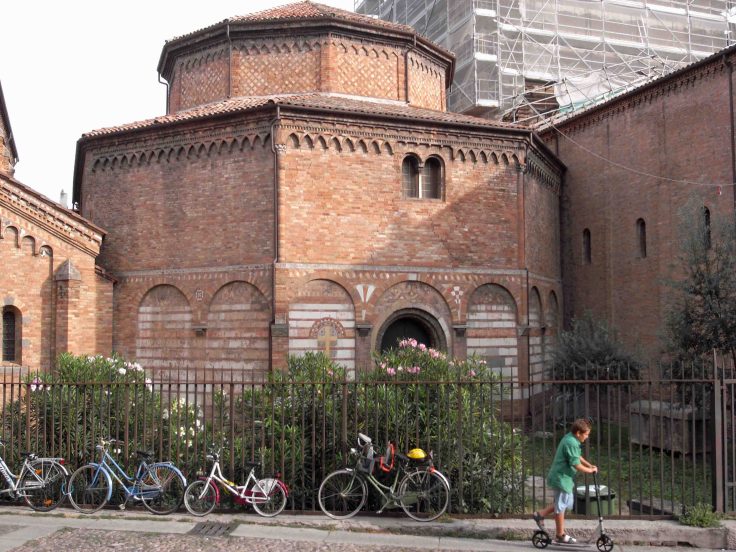
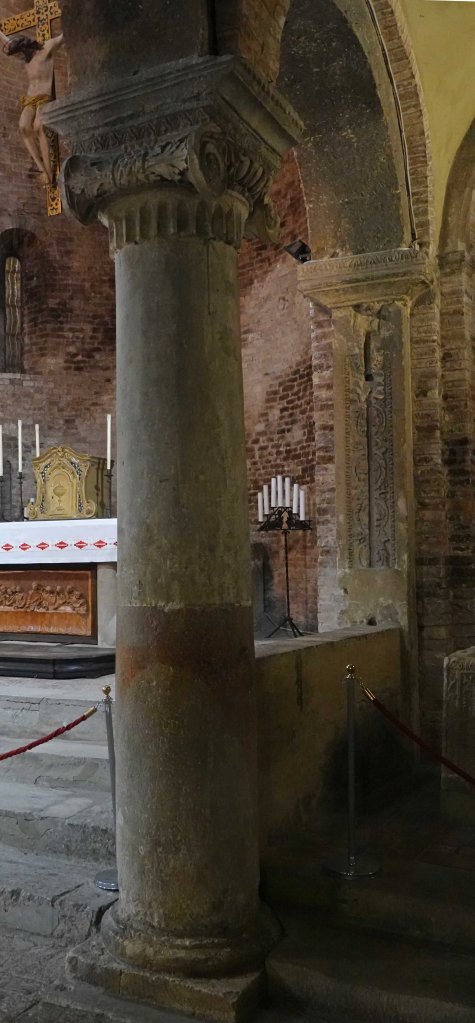
As was usual with temples to Isis, this one was located outside the Roman town walls, which ran along the line of today’s Via Castiglione. Inside Santo Stefano there are a number of ancient Roman columns and capitals, some probably in their original positions, giving further weight to the theory that the octagonal Basilica of the Sepulchre is based on a previous Roman temple.
The Church of the Crucifix and the Crypt
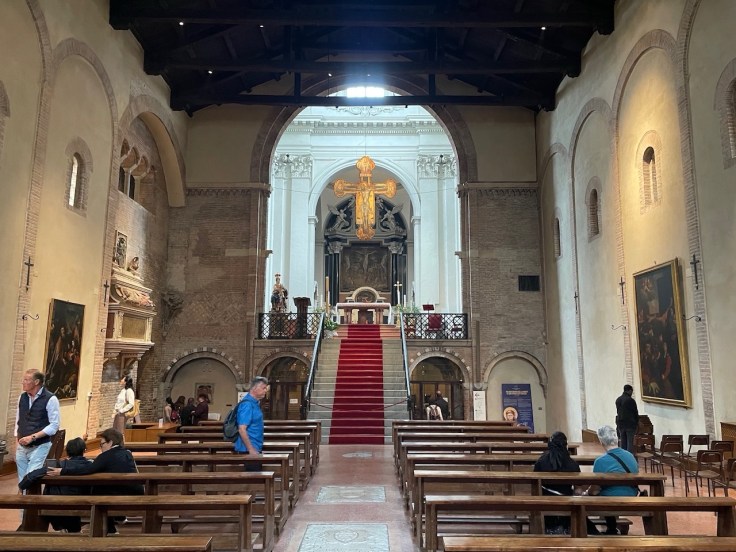
The main entry to the complex is via the church on the right. Built by the Lombards in the 8th century, it has undergone many alterations over the centuries. A large suspended crucifix dating from the 14th century gives this church its name – La Chiesa del Crocifisso or the Church of the Crucifix..
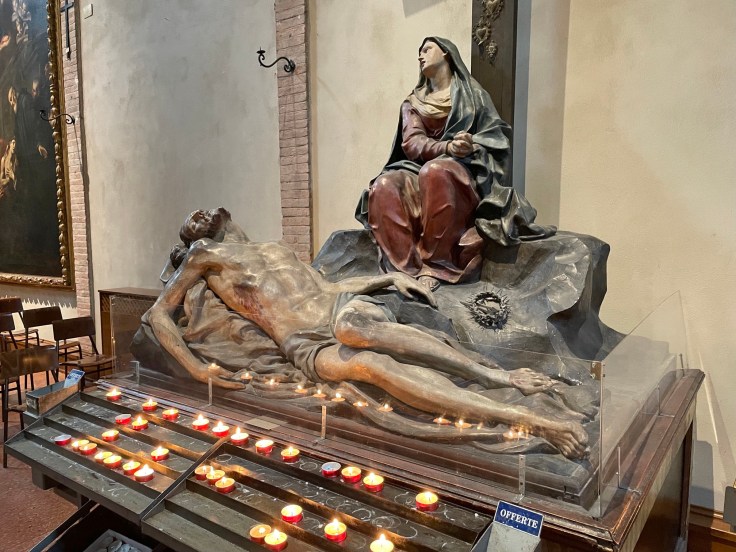
On the left is a sculpture from the 18th century depicting the “Lamentation over the Dead Christ”. The story goes that it was made from playing cards confiscated during the years when gambling was prohibited.
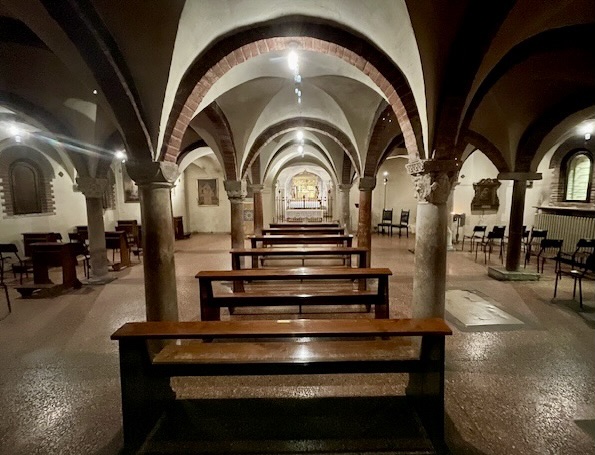
A crypt is accessible via stairs at the back of the church. This and the presbytery above it once formed a small, separate church entered from the courtyard at the rear. It was constructed early in the 12th century as a secure home for the remains of the local Saints Vitale and Agricola.
The Basilica of the Sepulchre
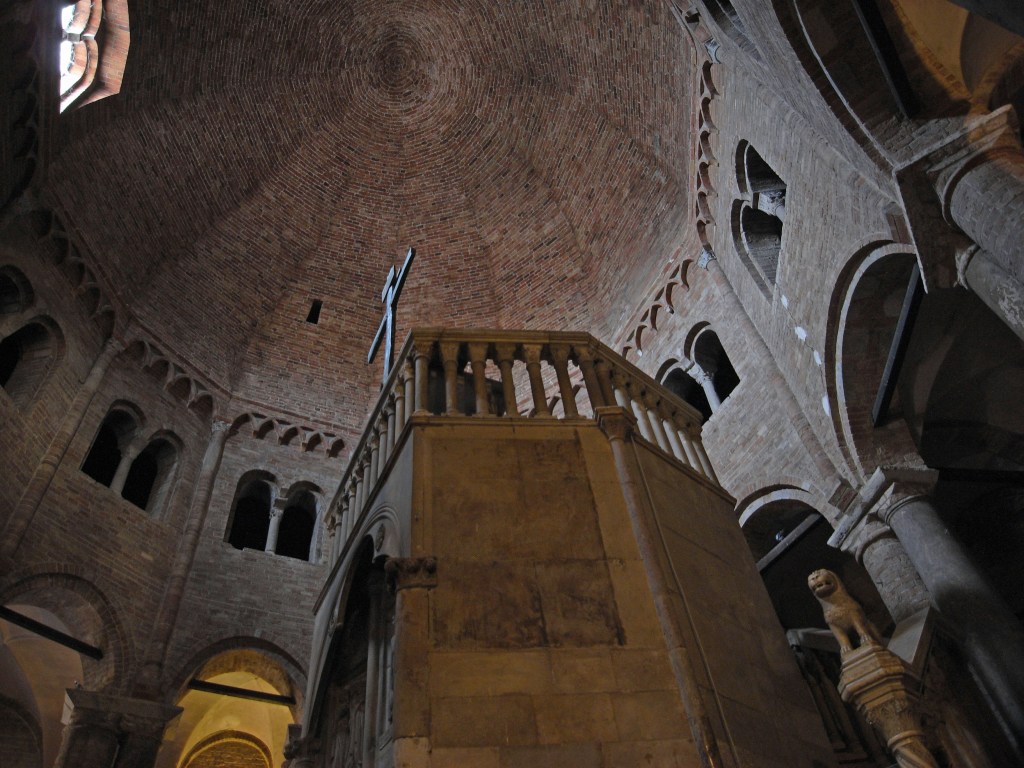
From this church, a doorway at the rear left gives access to the Basilica of the Sepulcre. The spring, which in ancient times represented the Rover Nile in early Christian times represented the river Jordan. In the medieval era, the water was considered miraculous and capable of healing. In all probability, this building was originally a baptistery. It dates from around the 5th century, but as mentioned above, it is probably based on a temple built around 2,000 years ago.
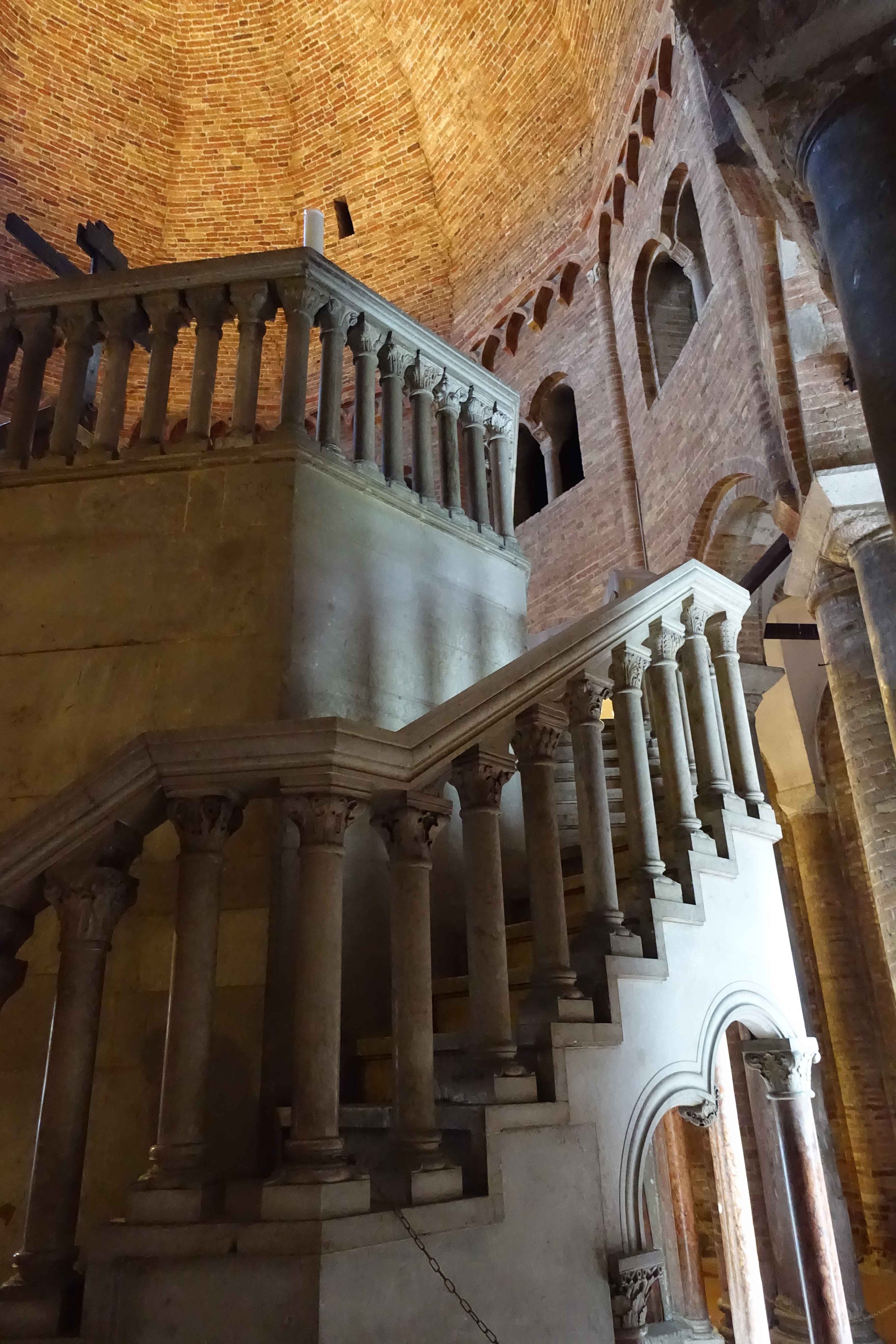
Usually temples to Isis were rededicated in Christian times to the Madonna or Saint Mary Magdalen, however this one bears the name of the Holy Sepulchre. Nevertheless, during the middle ages, the prostitutes of Bologna would come here on Easter Sunday to pray in memory of Mary Magdalene. Another tradition has it that pregnant women would come and circle the half sized replica of the Holy Sepulchre in the centre of the church 33 times and then go to pray at the fresco of the pregnant Madonna in yet another of the complex’s churches.
The replica is of the Holy Sepulchre in Jerusalem, and was constructed in the 13th century, perhaps by returning crusaders. It has been heavily modified over the centuries.
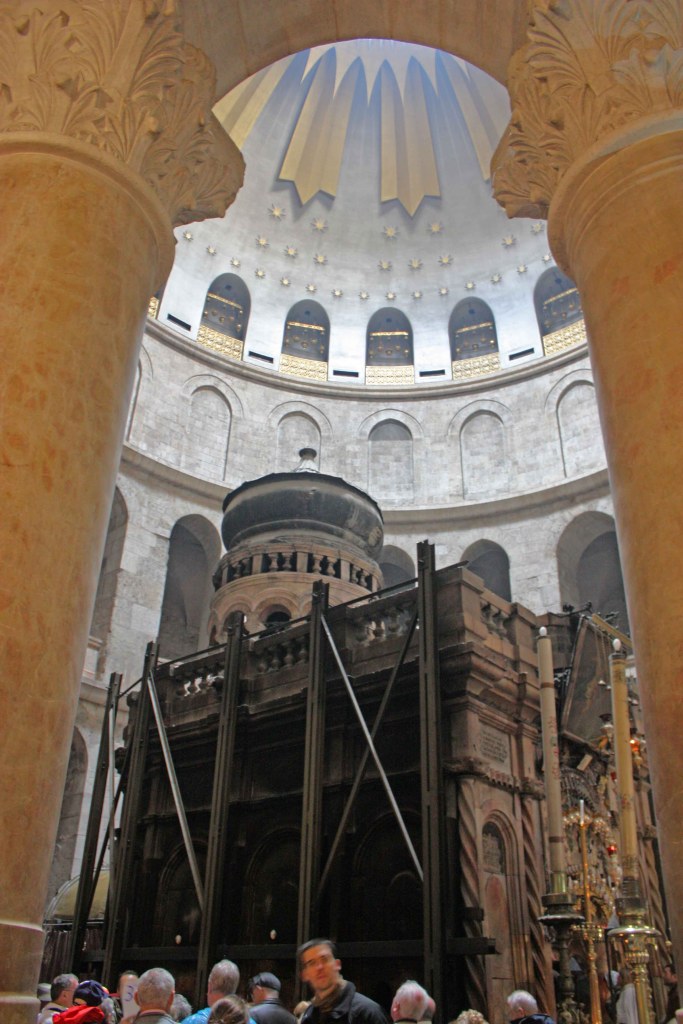
As a substitute for Jerusalem, Santo Stefano together with the nearby church of San Giovani in Monte, was a place of pilgrimage. The latter, situated on one of central Bologna’s few hills, represented the Mount of Olives.
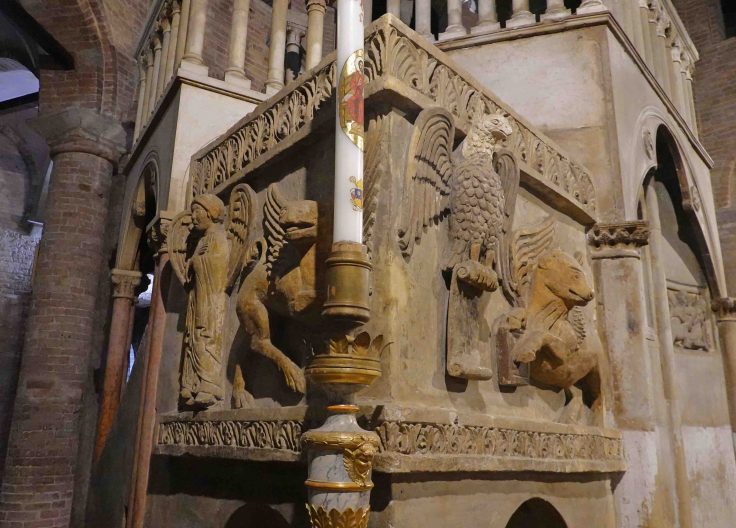
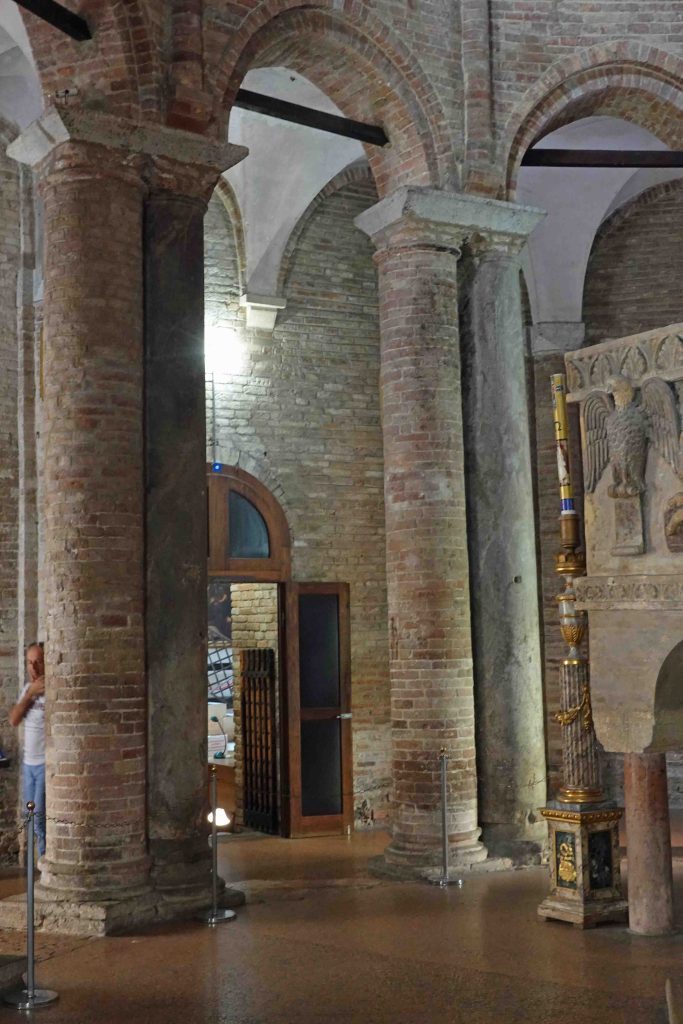
The church was badly damaged during incursions by the Hugarians. Probably as a result, the remaining marble Roman columns were reinforced with adjacent brick columns in medieval times.
The Basilica of Saints Vitale and Agricola
To the left of Santo Sepulcro looking from the Piazza is the church of Saints Vitale and Agricola. It was built in the 4th century. According to tradition, these two saints, master and slave, were victims of the persecution of Christians by the Emperor Diocletian and maryted in the year 304.
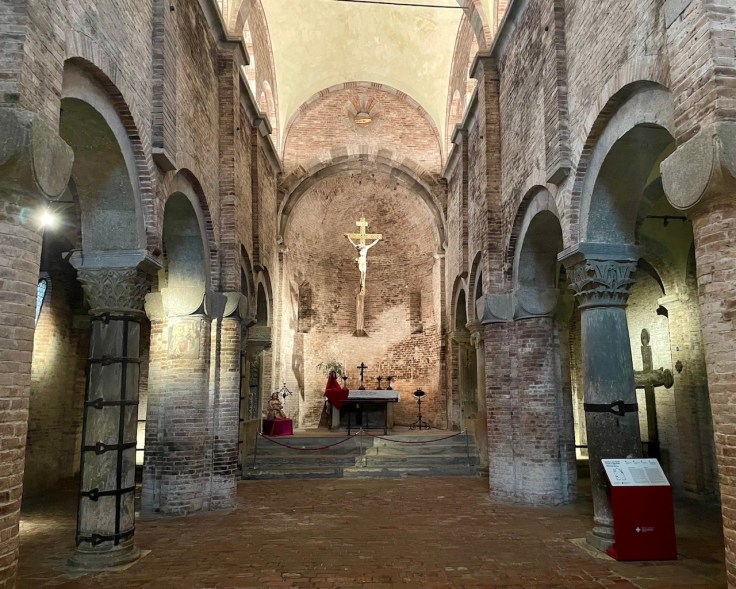
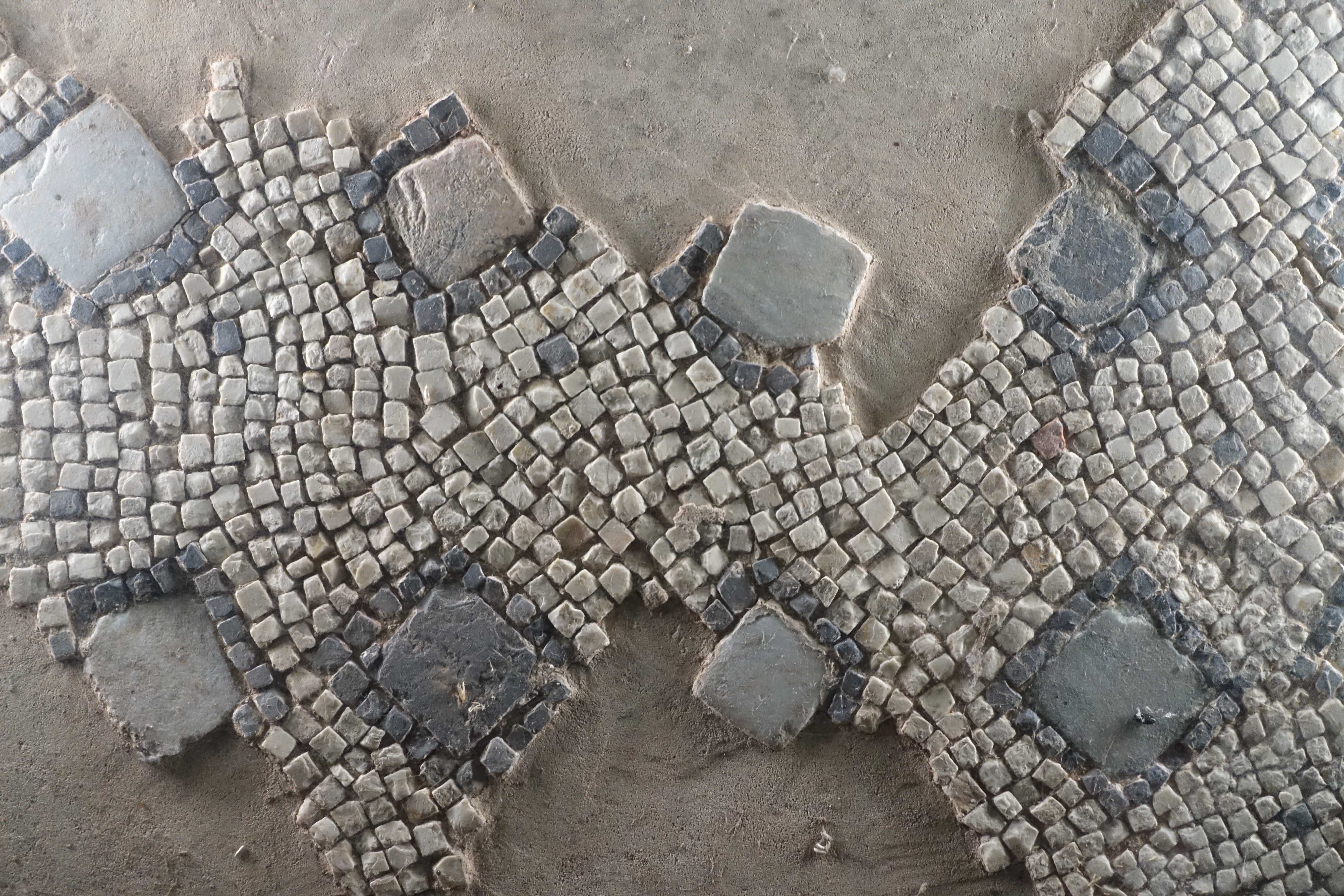
There are remains of the 6th century floor as well as Roman and Byzantine capitals. Whilst the remains of the saints were moved to Milan in the fourth century, two sarcophagi dated to the late 6th century bearing their names remain in the church.
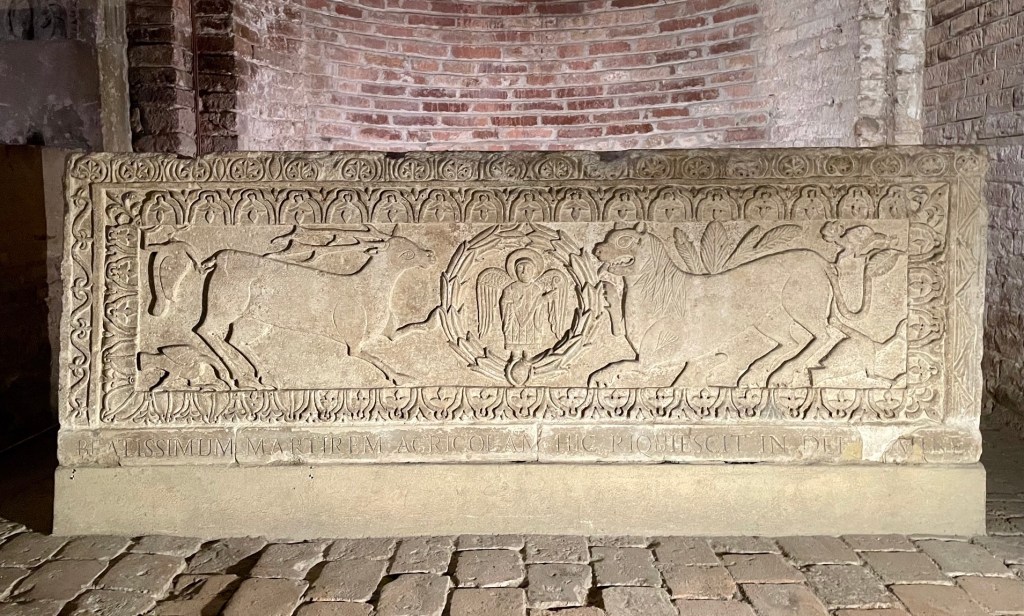
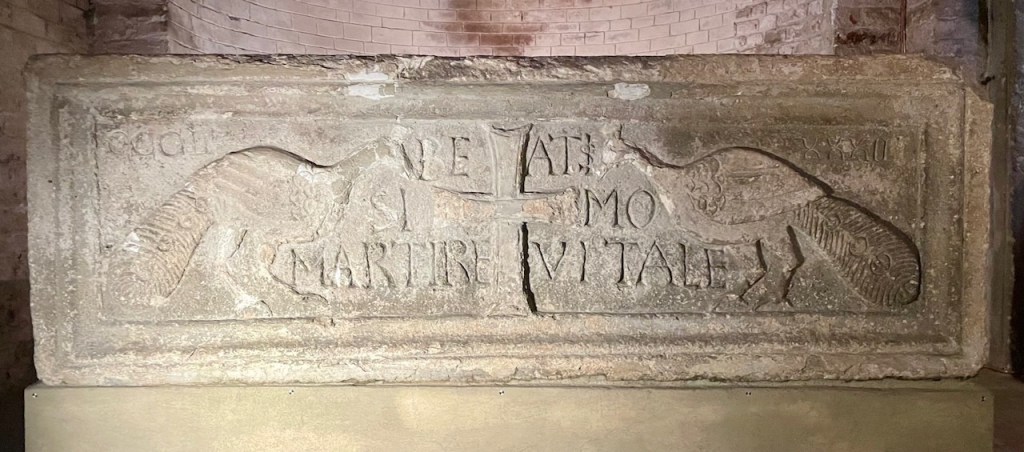
In the 15th century there was a belief that the remains of Saint Peter were in the church and as a result, the Pope of the time had the roof removed and the church filled with soil as it was affecting the pilgrim trade in Rome.
The Courtyard of Pilate
Behind Santo Sepulcro is a beautiful courtyard, known as the Cortile di Pilato or the Courtyard of Pilate. A central feature is a large basin called the Catino di Pilato or Pilate’s Basin.
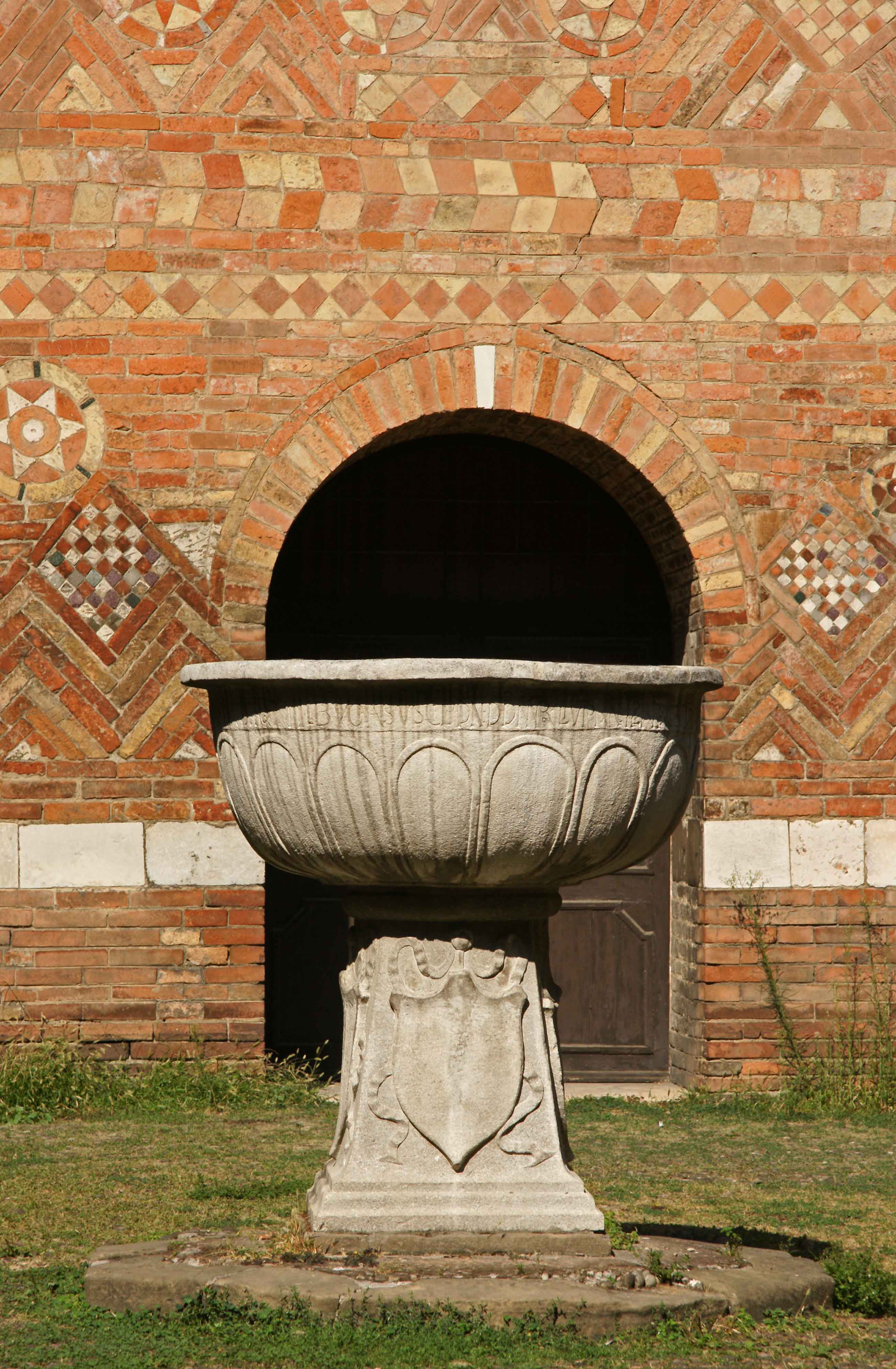
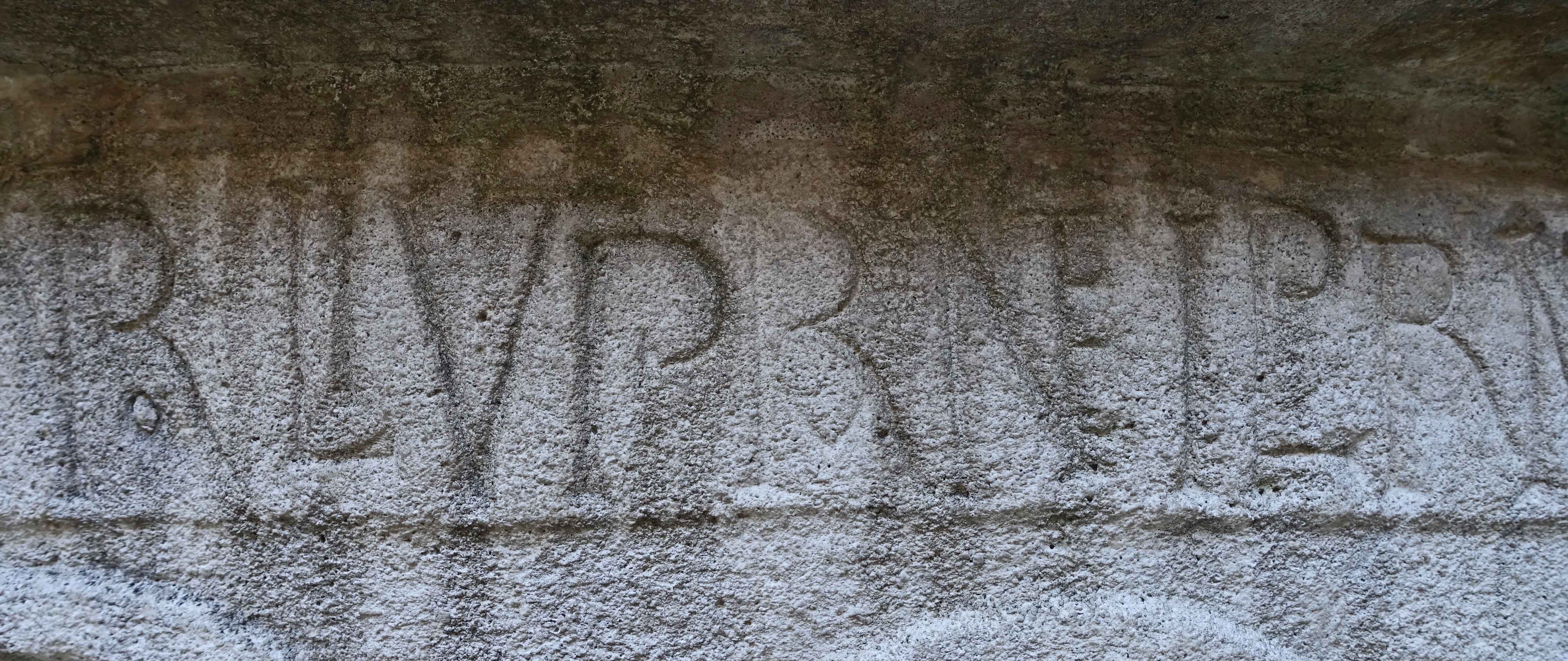
This basin is however of Lombard origin and bears the name of Liutprand, the Lombard king at the time of their conquest of Bologna. The basin dates from some time after then, probably between 730 and 740. Over the centuries, there have been many theories as to the original purpose of this bowl. At one stage it was believed to be that used by Pontius Pilate to wash his hands before sending Jesus to his death, hence the name. Another theory was that it was a baptismal font. However the balance of opinion now seems to be that it was a receptacle for donations of bread and wine later distributed to the clergy and the poor.
The Church of the Trinity
At the rear of this space is the Church of the Trinity where you can find what is reputedly the world’s oldest nativity set dating from the 13th century.

The history of this church is uncertain, but it is one of the oldest parts of the Santo Stefano complex. It probably started life in the 4th century as a basilica or martyrium which is a shrine built directly over the tomb of a martyr. This could have been the tombs of Vitaole and Agricola. In Lombard times, it was converted into a baptistry.

The Cloister
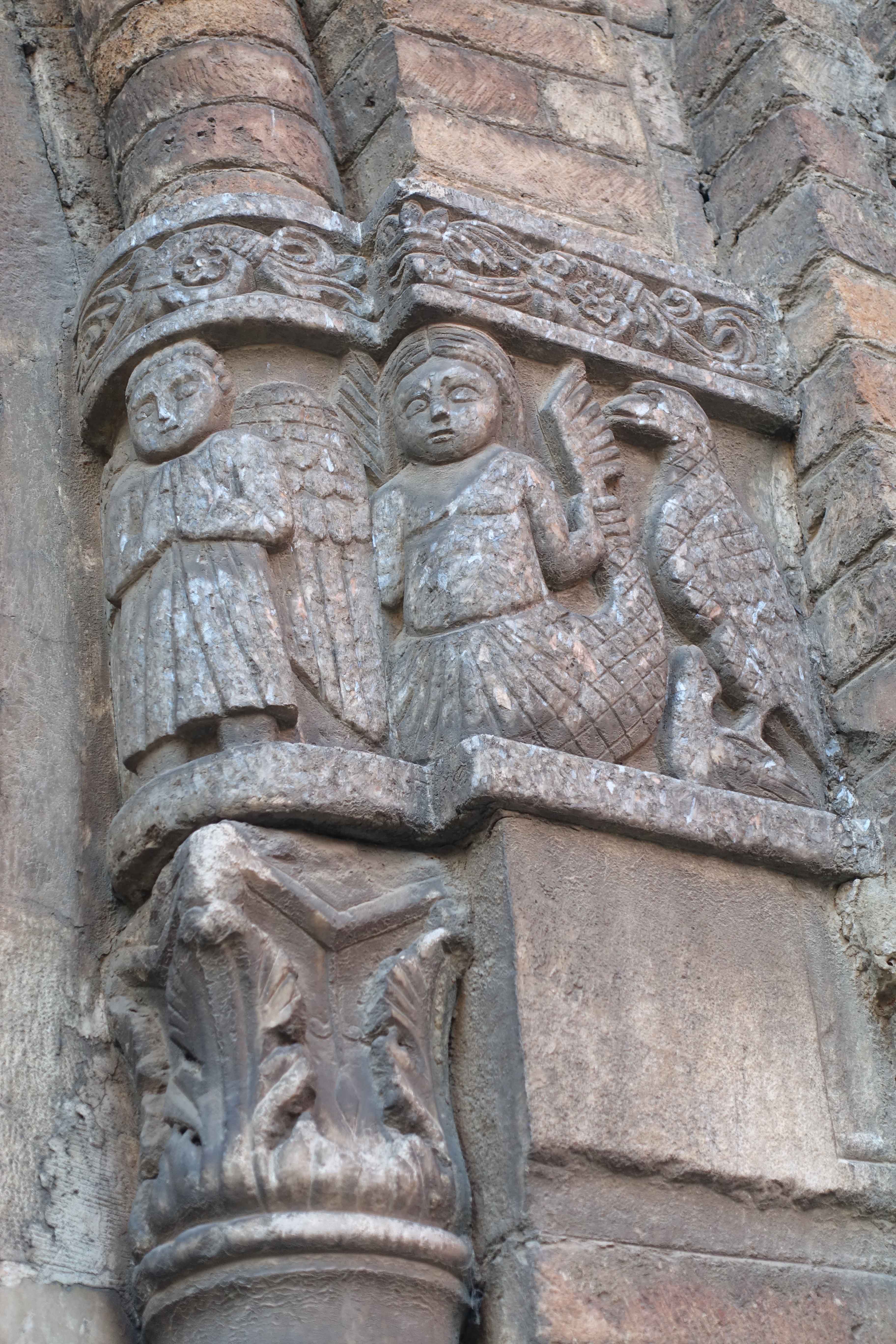
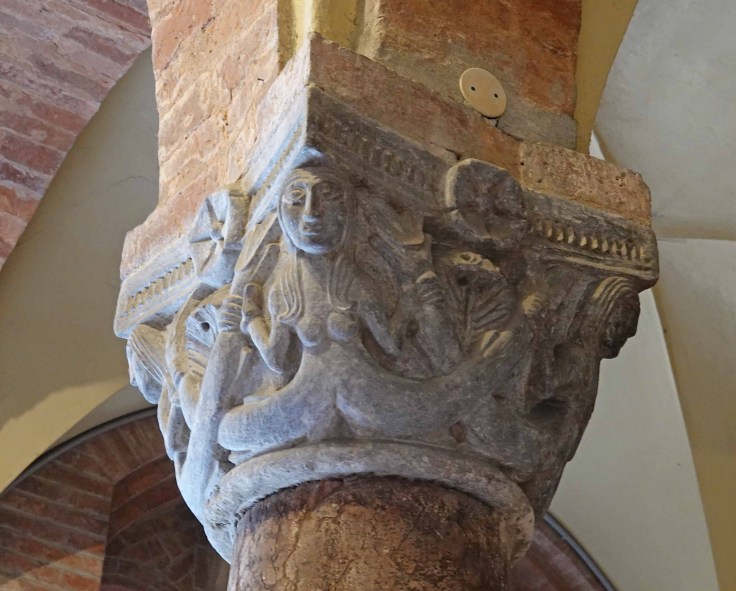
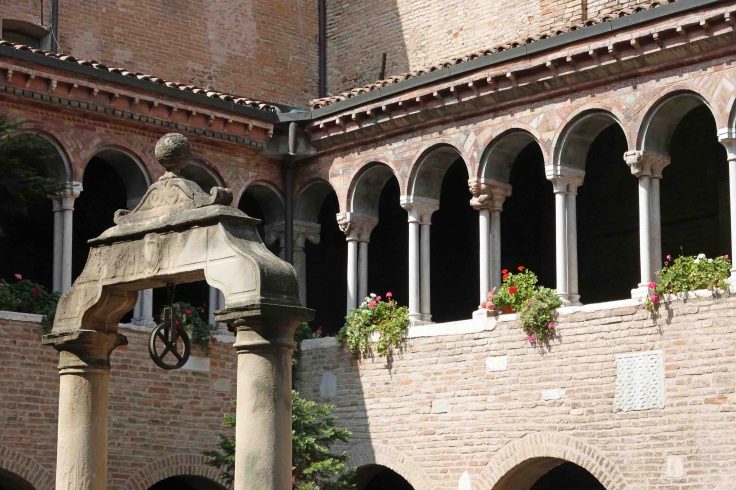
Continuing into the complex, you will find a two-storied medieval cloister with interesting capital carvings. The date of construction is uncertain, but the lower level is thought to have its origins around the year 1000 after the foundation of a Benedictine monaster,y and the second floor in the 12th century.
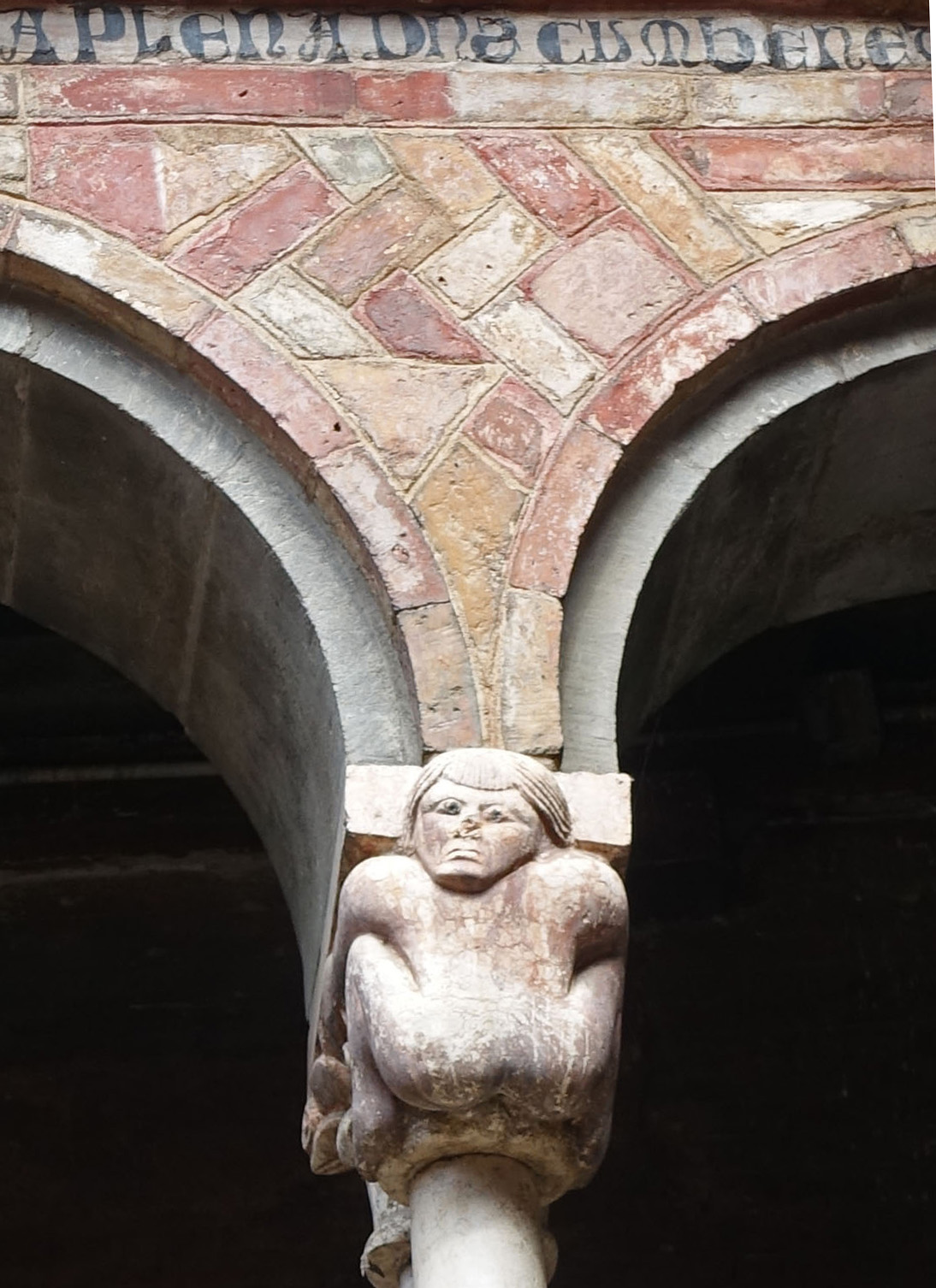
The Museum
Beyond that is a little museum of religious art, as well as a shop, which, when I first visited Bologna, was run by the monks selling products of various monasteries.
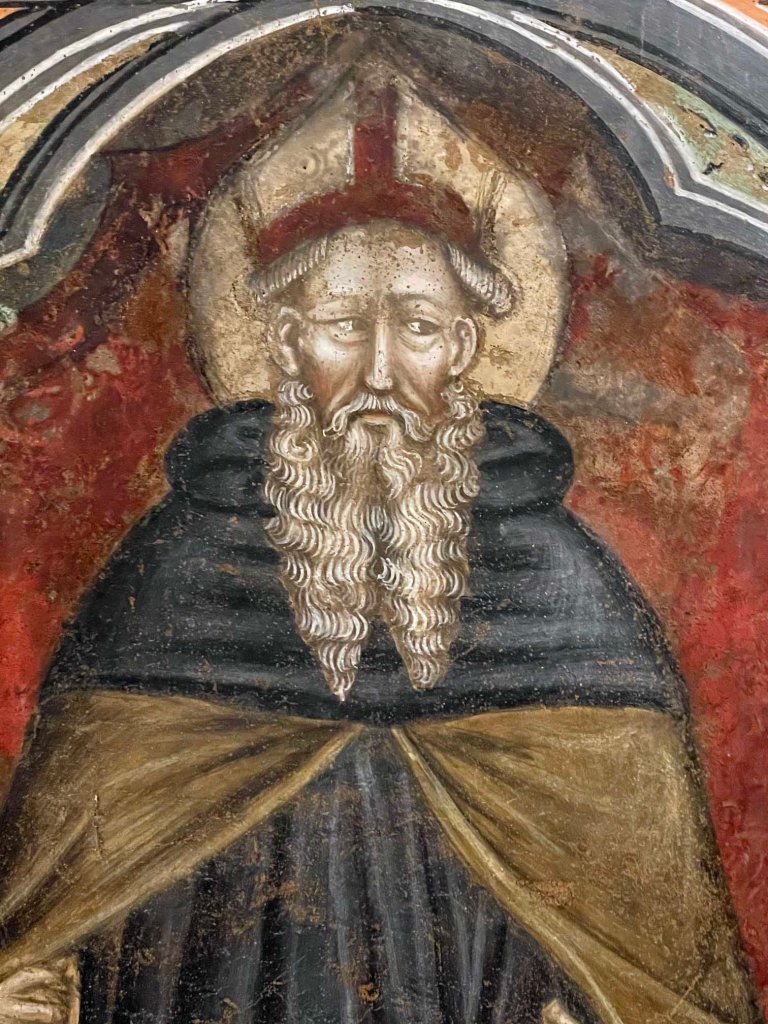
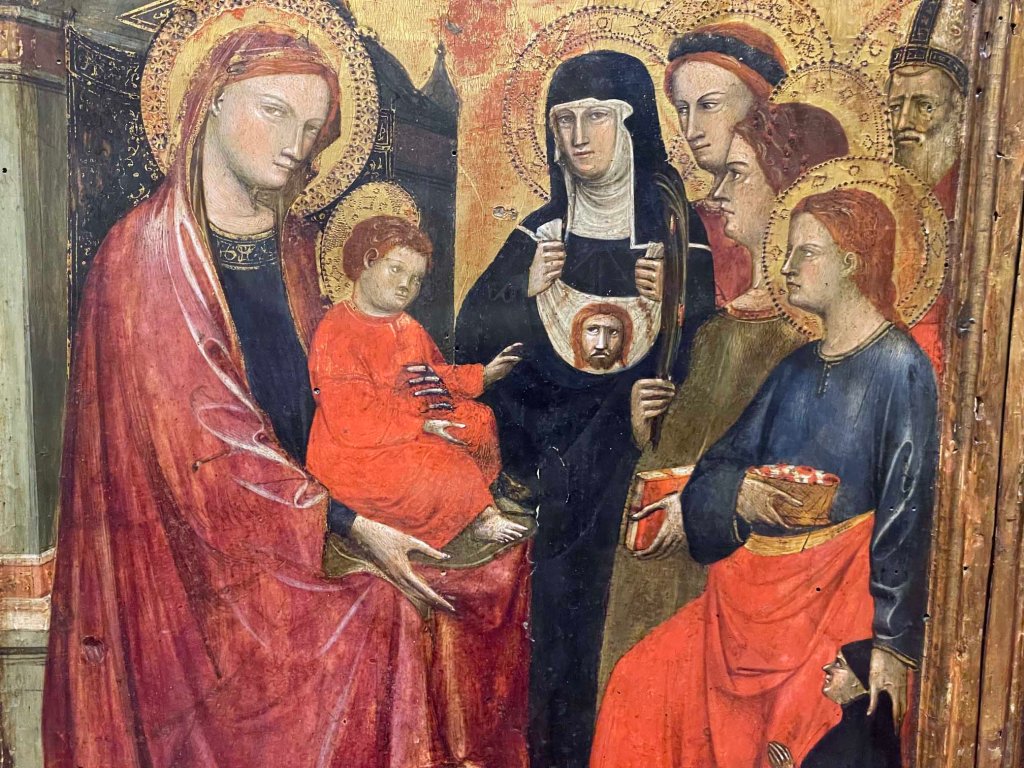
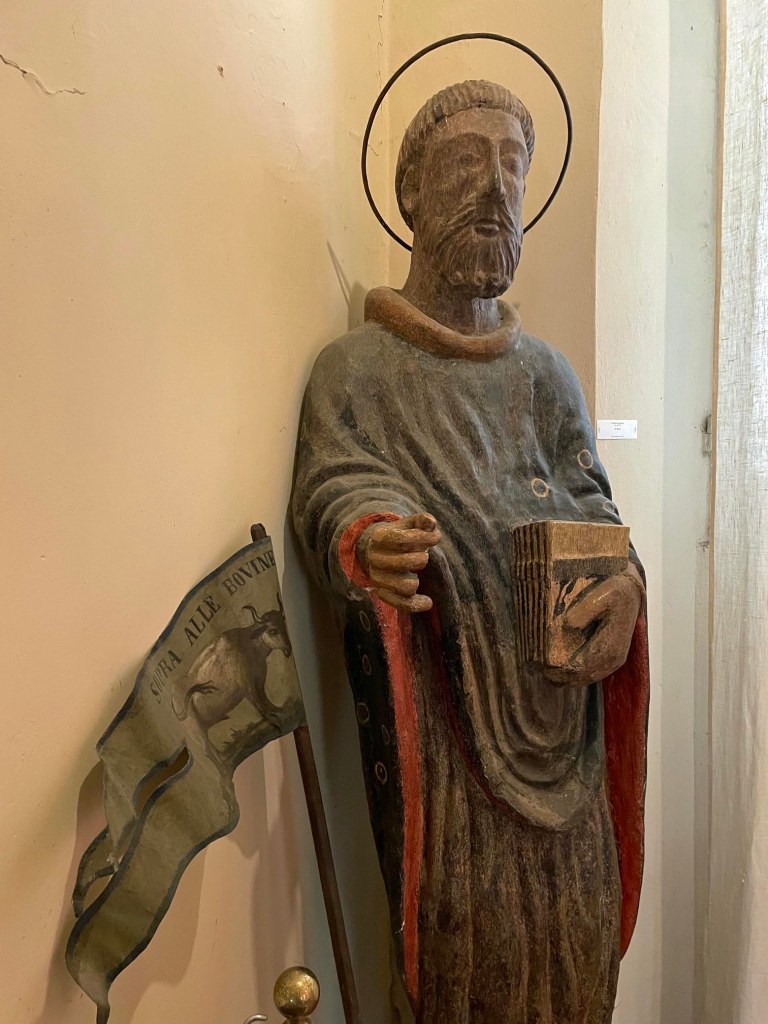
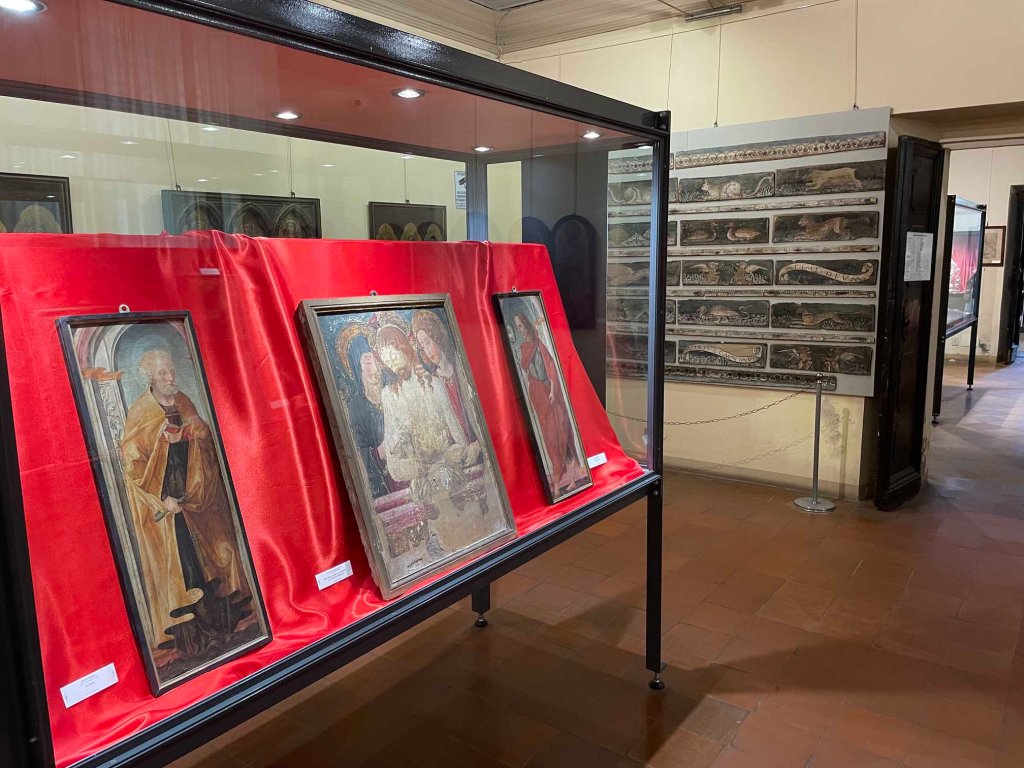
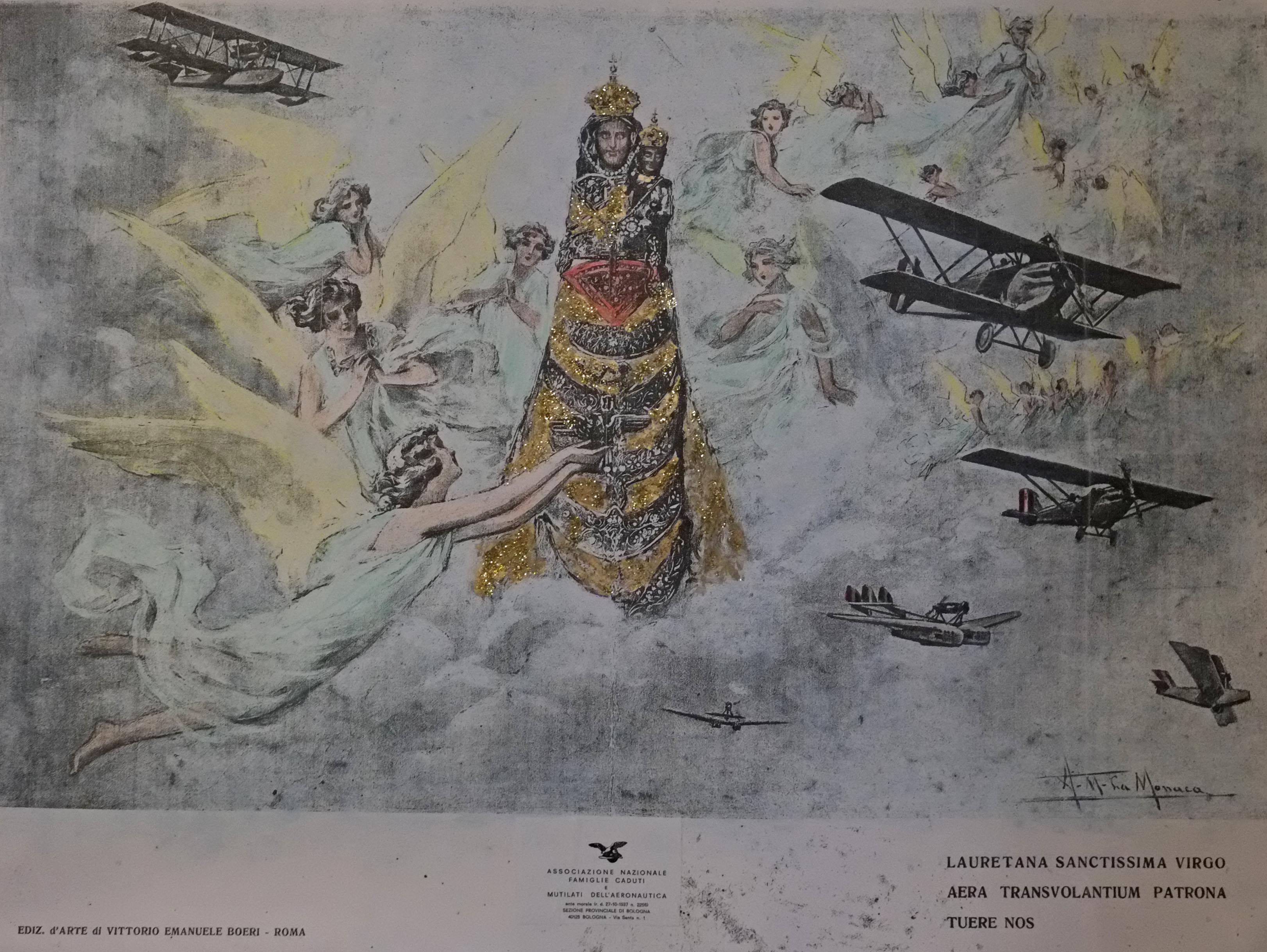
Other chapels are open at times, including one dedicated to the Italian Air Force.
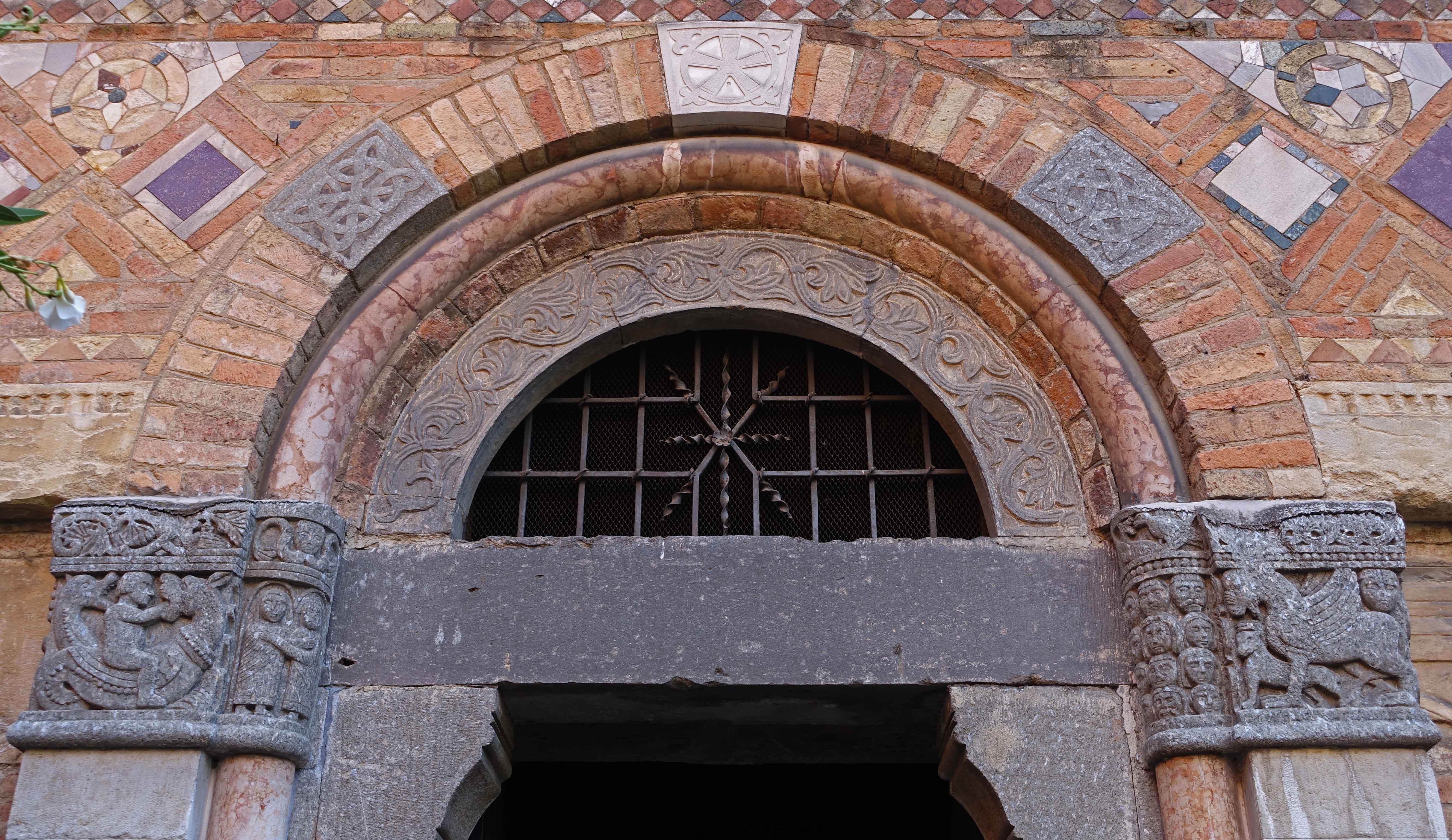
A visit to Santo Stefano is like a short journey through the layers of history of the city. Only memories of pre-Roman times are absent, although probably present below the floor in the form of remains of previous places of worship. Outside, a nice coffee awaits you in one of the nearby cafes in the Piazza or Corte Isolani.
 Bologna on Foot
Thanks for this Paul, very interesting and informative. Well researched too.
LikeLike
Thanks Phill. We’ve been going to Bologna now for about 6 years so I’ve got lots to write about and lots of photos!
LikeLike
Thanks Paul. This is fascinating. So much history in one place. So many stories in those buildings.
LikeLiked by 1 person
Bravo, Paul! Non sapevo la storia di questo “gioiello”. Ha una certa magia ed è bello ammirarla, fuori e dentro
LikeLike
Grazie Beatrice!
LikeLike
Just visited the 7 churches. For me it’s definitely a thin place. Very spiritual with lots of energy of universal love. Not surprising giving the former dedication to Isis. I stayed there many hours and will certainly come back.
LikeLiked by 1 person
I think the 10th invasion was by Hungarians, not “Huns.” https://en.wikipedia.org/wiki/Santo_Stefano,_Bologn
LikeLike