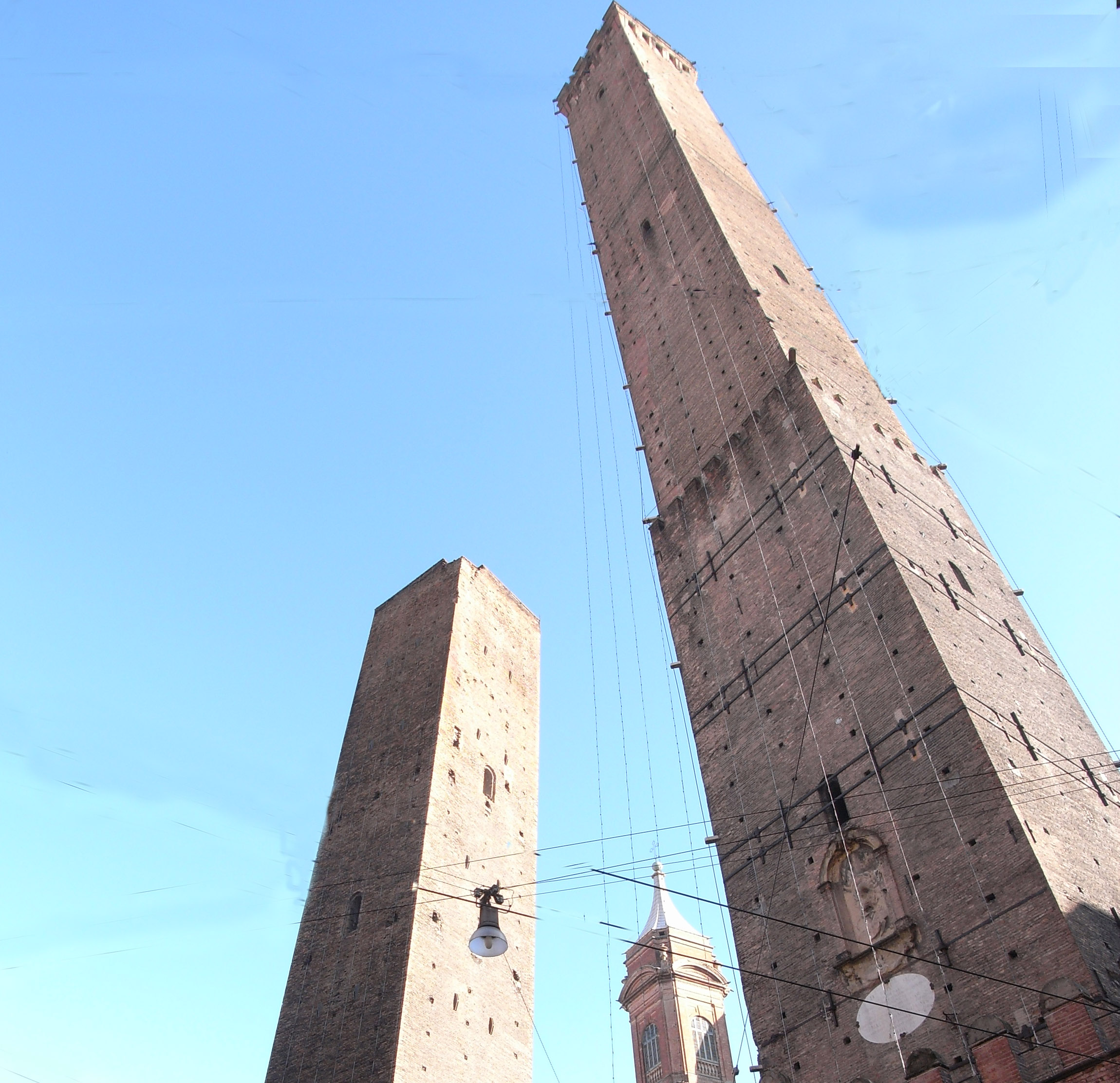

Piazza Maggiore in the centre of Bologna is dominated by the massive unfinished Basilica of San Petronio, the male patron saint of Bologna. It’s the tenth biggest and the largest brick gothic style church in the world. Construction commenced in 1388 and ground to a halt sometime in the 16th century.
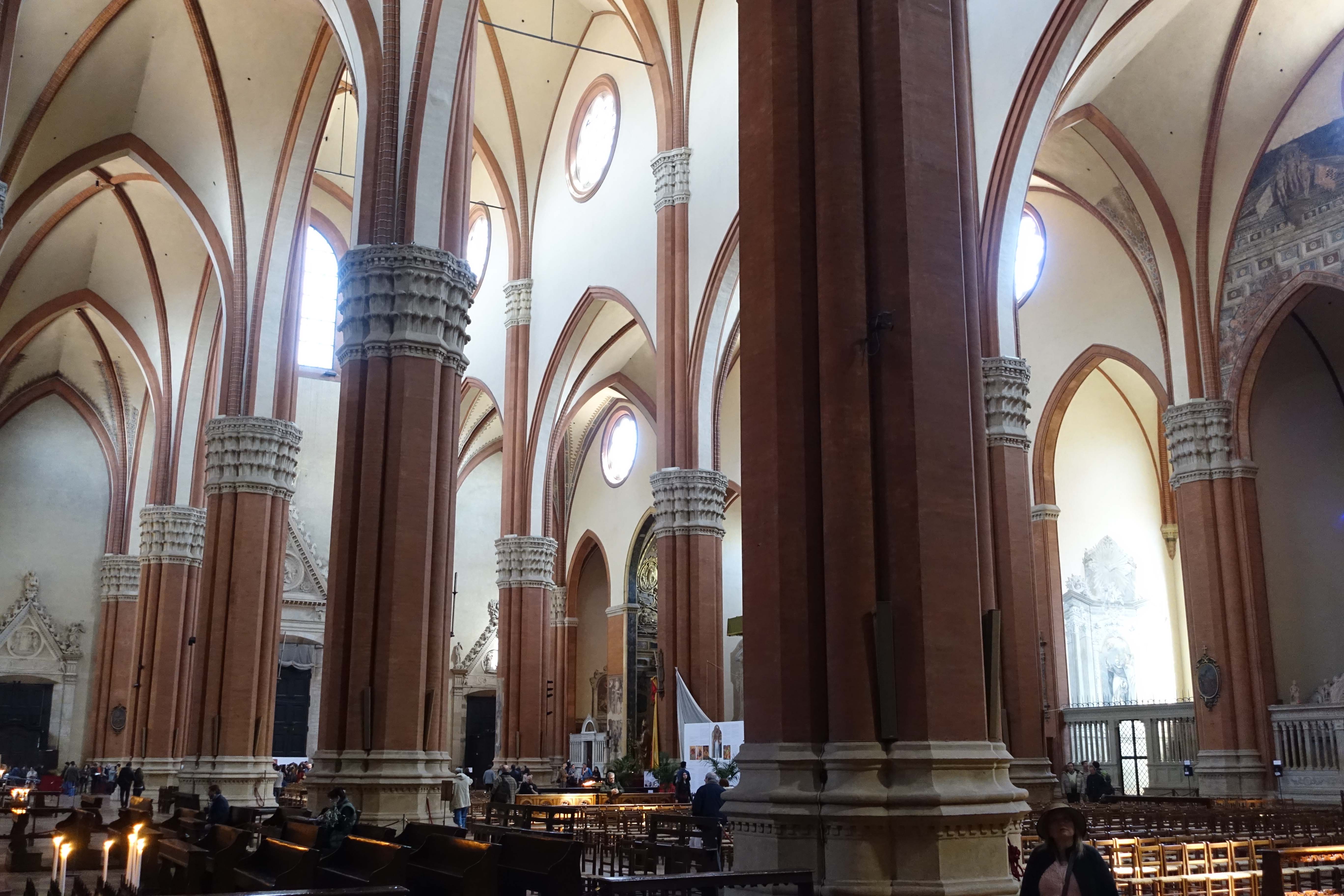
On any day around midday you’re likely to see a group of people intently looking at the floor of the church. What are they up to?

Before the invention of the electric telegraph there was no concept of standard time or time zones. There was no need for such a concept as the fastest form of communication was a galloping horse. With the construction of railway lines between cities and their associated timetables, standard time synchronised by telegraph messages became the norm.
Before then, each town had its own time, usually determined from when the sun was at its highest point each day. The sundial is the traditional way of measuring this. A meridian line is a far more accurate instrument to determine solar noon as well as to measure progress through the months of the year and to ascertain important days of the solar year such as equinoxes and solstices.
Also the length of the Bologna meridian line, the longest internal functioning one in the world, is such that at the time of its construction it was a very important instrument for astronomical research.
High above the floor of the church there’s a hole in the ceiling of the left nave.

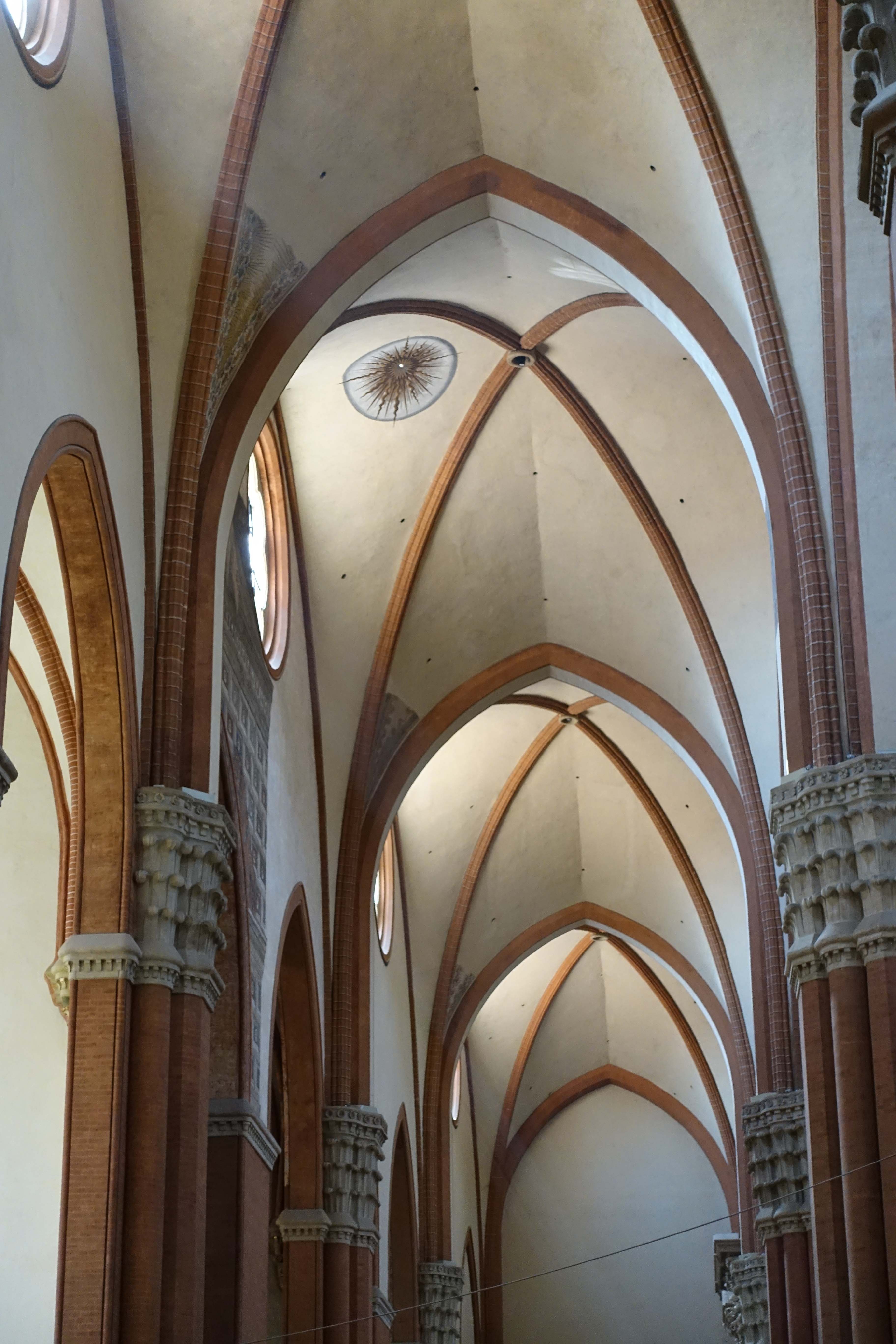
For about ten minutes either side of local noon, a circle of light is visible on the floor, as long as the sun is not obscured by cloud. Depending on the time of the year, this occurs in Bologna sometime between a few minutes before and almost a half an hour after Central European Standard Time 12pm noon. During summer time this is an extra hour later again around 1pm.
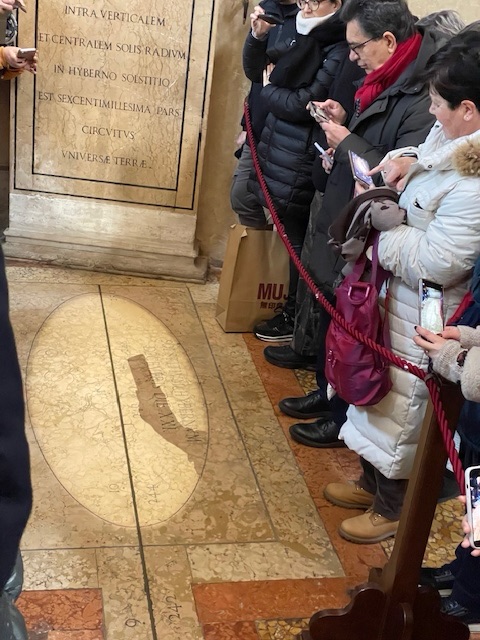
As the sun is at different heights during the year , the circle of light appears at differing sizes along a line from almost directly below the hole in the ceiling in summer to close to the front wall of the church in winter. The corresponding month and dates are shown on the line.

The meridian line was constructed by Gian Domenico Cassini in 1655. It was rebuilt by Eustachio Zanotti in 1776 and its high accuracy has only diminished slightly since then due to changes in the earth’s orbit and some settling of the floor. Great trouble was taken to maximise the accuracy of the installation, particularly to ensure the line on the floor was a close as possible to horizontal.

A meridian line needs to run exactly north/south. Unlike most churches which are aligned east/west, the basilica is aligned to Piazza Maggiore on which it stands and a bit off north/ south. Luckily the required length of the line could be achieved avoiding the church’s many columns.
Measurements using the meridian line helped Cassini confirm the need toomit a leap year in 1700, as proposed in the Gregorian calendar and to verify Kepler’s second law regarding the speed of planets in elliptical orbit. Galileo’s idea from some thirty years earlier that the earth rotated around the Sun and not vice versa was also confirmed. All this was possible due to the 67 metre length of the meridian line allowing much more accurate measurements than was possible using the telescopes of the time.
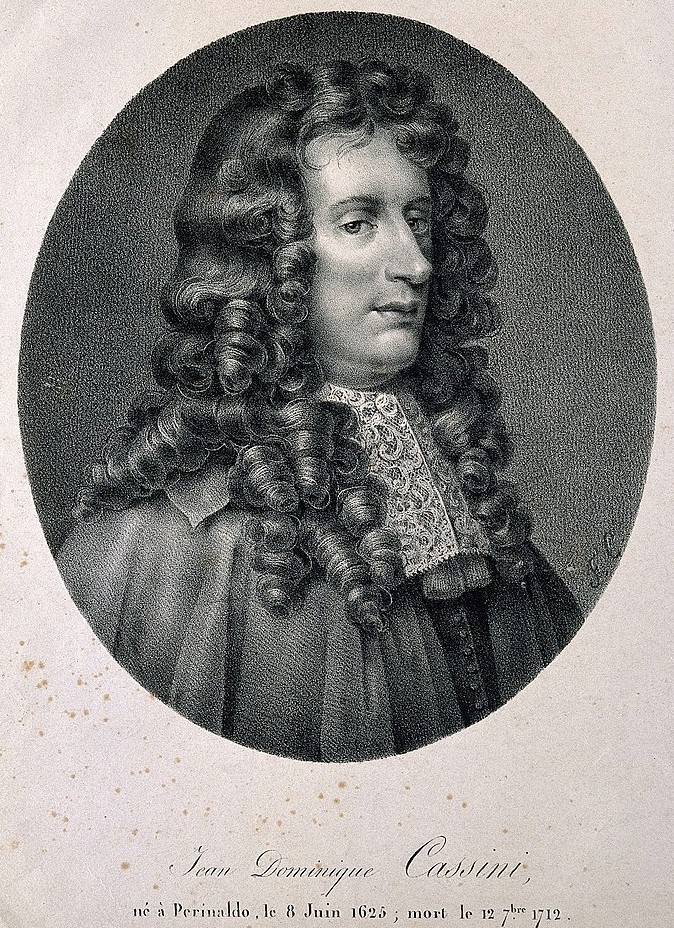
Finally, as you turn to leave the Basilica, look up at the window high in the front wall above the main door. You’ll see a little seat at an angle to the window. In fact, it’s aligned to the meridian line. From this vantage point, Cassini planned his creation.


If you’re in Bologna in the middle of a sunny day, don’t miss a visit to watch the sun’s image cross the line!
Winter Solstice 2024
In 2024, I made it to San Petronio on 22 December, the day after the Winter Solstice. Looking up at the ceiling hole, the appearance was quite different from some other times of the year.
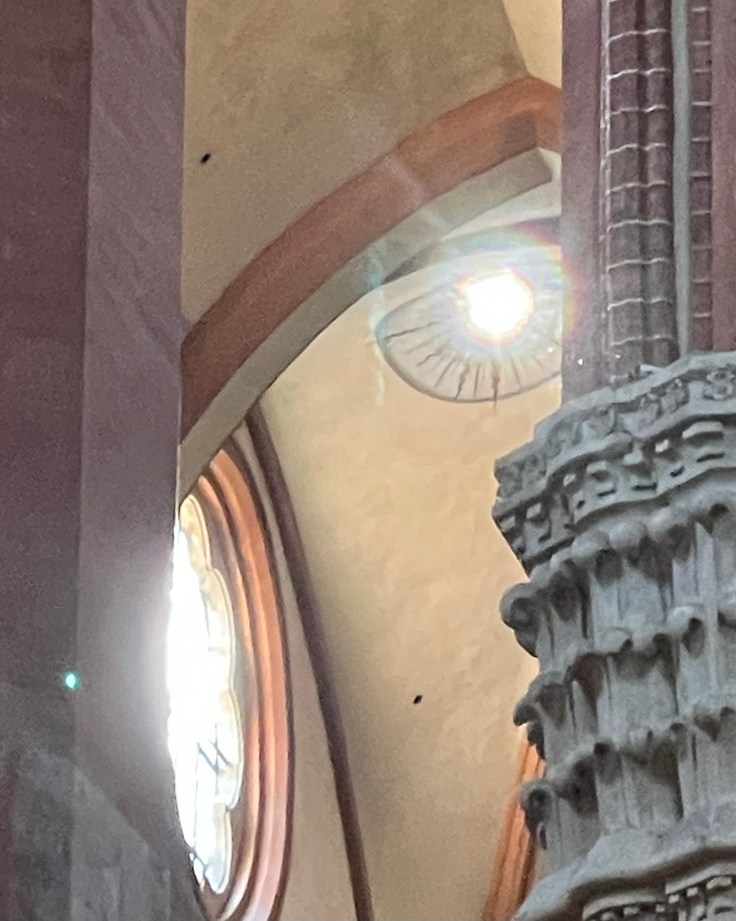
A light cloud cover had cleared mid-morning, and as the sun’s image approached the meridian line, it looked like we would get an excellent display. A few seconds before noon, someone thrust their phone out creating a shadow and spoiling things for everyone, including themselves! People were calling out “telefono, teléfono!” but it was too late.

Outside the basilica in Piazza Maggiore there are more fascinating things to see, as described in my post, Curiosities of Bologna’s Piazza Maggiore .
You can find further astronomical detail at this site.
For your visit, you can find when solar noon will occur here.
 Bologna on Foot
Paul, I’d like to thank you very much for your informative, stylish blog with its beautiful pictures! We checked out the Meridian Line, which was fascinating – thanks for the tip and for the additional “more detailed info” link. Also, on a rainy day, we took advantage of your excellent suggestion to follow the colonnaded walk to Santuario di San Luca. Although we have just now returned to the US, we will continue to explore Bologna via your blog.
LikeLike
Hi Robert, thanks so much for your kind comments. I’ve been writing this blog for a few years now and I get very little feedback and it’s much appreciated. Paul
LikeLike
We enjoyed seeing the circle of sunlight on the Meridian line yesterday around 1.15pm and thanks for your very informative description.
LikeLike
Thanks for your feedback and I’m glad you enjoyed watching the sun’s image.
LikeLike
Nos ha encantado tu post sobre la meridiana de San Petronio, desafortunadamente nosotros no la hemos podido observar las veces que hemos visitado Bolonia y encontrarnos con tu post fue una manera de compensar de alguna manera esa visión tan curiosa. Felicidades y gracias por tu post. Saludos.
LikeLiked by 1 person
Thank you about that amazing story! Me and my family spent a week in Bolgna year and half ago. Of course we were there, of course made some photos in Meridian… But just now I realize how important and great is that place. Especially for land surveyors like me. Cassini was one of the most important scientist in our engineering books. We didn’t notice a whole in the ceiling, didn’t sow a seat above front door. May be good reason to visit Bologna once again. Thank you about that story!
LikeLiked by 1 person
Hi, I was in Bologna not too long ago but missed this. Will have to return … Anyway, nice blog post!
LikeLiked by 1 person
Thank you Paul for your informative blog. Your carefully researched guides to Bologna , with accompanying photographs far surpassed any other tourist information I found. Your insights formed the bases of our sightseeing. You demonstrate that Bologna is much more than quaint porticos & fine food. Thank you.
regards Maureen
LikeLiked by 1 person
Thanks so much for your comment Maureen. Feedback like yours makes all the work I do in the blog worthwhile.
LikeLike